BlogDigital Marketing5 min read
Behind Buzzwords: What really means ‘Authenticity’ (And How Brand Can Truly Achieve it)
What is authenticity in marketing? Learn how brand authenticity builds consumer trust, cuts through marketing buzzwords, and creates real audience connections.
Authenticity can be the most commonly used word in marketing nowadays. It shows up in brand guidelines, marketing campaign pitches, keynote speeches, and agency presentations. Everyone claims they are “authentic.” But ask five marketers what authenticity in marketing really is , and you will probably get five very different definitions.
Problem? Very often, the brand authenticity is considered as a vague value statement rather than a tangible business practice. The end results are campaigns that say all the correct words but still feel hollow, disconnected or forced.
In a technology in which consumer skepticism is higher than ever, simply slapping the label authentic on your brand isn’t always enough. To earn a consumer’s trust, you need to show through actions, now no longer simply messages that your brand without a doubt lives as much as what it claims. This blog will break down what authenticity really is (and isn’t), why it matters, and how brands can move beyond the marketing buzzwords to build significant, lasting connections.
What Authenticity in Marketing Actually Is
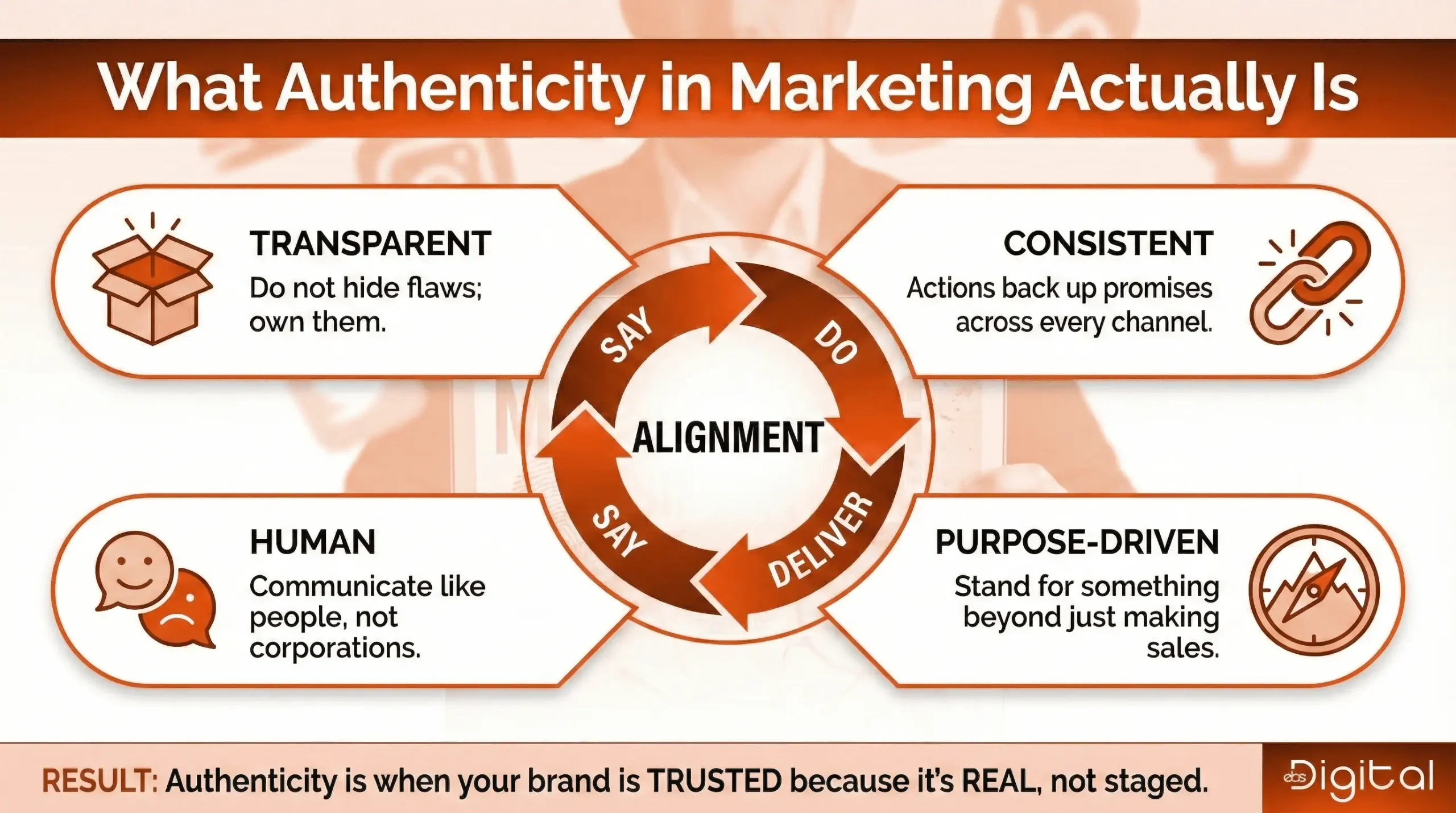
At its core, authenticity isn’t about projecting perfection or sounding “relatable.” It’s about alignment: making sure what your brand says, does, and delivers all matches. When there is consistency between your values, your messaging, and your customer experience, people start to believe you.
True authentic branding is about being:
- Transparent: You do not hide flaws or mistakes; you own them.
- Consistent: Your actions back up your promises across every channel.
- Human: You communicate like people, not corporations.
- Purpose-driven: You stand for something beyond just making sales.
Put simply: authenticity is when your brand is trusted because people see its real, not staged.
Why Authenticity Works: The Trust Factor
Trust has come to be the most treasured currency in today’s market. According to global consumer studies, people are much more likely to buy, stay loyal, and recommend brands they trust. And trust is built on perceived authenticity.
Here’s why it matters:
It cuts via skepticism.
Audiences nowadays are marketing-savvy. They scroll beyond ads, query motives, and fact-test claims. Authentic brands stand out because they feel honest.
It builds loyalty.
When clients consider your brand sincerely cares about their wishes and values, they may be much more likely to stay with you long-term even though less expensive or flashier alternatives exist.
It drives advocacy.
People do not simply purchase true brands, they communicate directly with them. Word-of-mouth, user-generated content material, and real evaluations come to be herbal extensions of your method.
Authenticity isn’t a “feel-good” concept; it is a business driver.
What Authenticity in Marketing Is Not
Let’s resolve a few not common misconceptions:
- It’s not posting unfiltered images simply to look “real”
- It’s not leaping on social problems for PR points.
- It’s not saying “we care approximately about clients” even as it cuts corners in service.
- It’s now no longer simply every other one of these overhyped marketing buzzwords.
Authenticity works simplest if it is woven into your brand DNA, now no longer bolted on as a marketing campaign tactic.
How to Build Authentic Branding in Practice
So, how do brands actually do authenticity instead of just talking about it?
1. Live Your Values
Start with clarity: what do you stand for? If your brand values sustainability, back it up with real action; eco-friendly sourcing, transparent reporting, or partnerships with credible organizations. Don’t simply put up approximately one as soon as a year on Earth Day.
2. Show Transparency
Consumers know no brand is ideal. In fact, honestly approximating shortcomings regularly builds more consumer trust than pretending flaws do not exist. Share the behind-the-scenes processes, admit errors after they happen, and provide an explanation for how you are improving.
3. Put People First
Authenticity is the way to human connection. Highlight your employees, clients, and network in preference to hiding at the back of company language. Celebrate real testimonies and stories that replicate your brand’s function in people’s lives.
4. Stay Consistent
Authenticity collapses whilst messaging and movements do not align. If you sell inclusivity, your hiring practices, leadership, and content material have to replicate it. Consistency throughout platforms—social, email, website, client service—reinforces credibility.
5. Build Two-Way Relationships
Don’t simply communicate with your audience; interact with them. Listen to feedback, reply with honesty, and adapt where necessary. The more your clients experience hearing, the more they consider you to be true.
Authenticity Across Marketing Channels
How does authenticity display in exercise throughout virtual channels?
- Social Media: Share unpolished moments, not just brand-perfect visuals. Feature real voices; customers, employees, and communities.
- Email Marketing: Write like a human. Personalize, empathize, and add value instead of blasting accepted promotions.
- Content Marketing: Be honest about challenges in your industry and offer useful insights, not just sales pitches.
- Paid Ads: Use storytelling rooted in real client stories. Overly polished, “too perfect” ads often feel fake.
- Video: Show real people, not just actors. Behind-the-scenes clips or client testimonials regularly feel more authentic than scripted commercials.
Measuring Authenticity: Can You Track It?
While authenticity feels intangible, its effect may be measured:
- Engagement rates: Do people comment, share, and engage more with more transparent content material?
- Sentiment analysis: Are brand mentions more high quality and trusting over time?
- Customer retention: Do people preserve coming again due to the fact they focus on your brand?
- Referrals & advocacy: Are your clients recommending you to others without incentives?
If your authenticity method is working, you will see more significant interactions, not simply clicks.
Final Thought: Authenticity Is Earned, Not Claimed
The phrase “authenticity” can be a buzzword; however, its effect is real. In a market full of polished campaigns and hollow slogans, the brands who ensure that it will thrive are people who live actually to who they are, always stay true to their values, and earn belief via action.
Consumers don’t need perfect; they want real. And whilst brands supply that, authenticity stops being a buzzword and begins to evolve, turning into an competitive advantage. In ebs Digital, we help brands to move beyond the buzzwords and create authentic marketing strategies that create real trusts, loyal and long -term growth.
FAQ
Frequently asked questions
What does authenticity in marketing mean?
Authenticity in marketing means aligning what your brand says with what it does—showing transparency, consistency, and honesty that build consumer trust.
Why is brand authenticity important?
Brand authenticity drives loyalty and advocacy. Consumers are more likely to buy from and recommend brands they perceive as genuine and trustworthy.
How can a brand show authenticity?
Brands can show authenticity by living their values, being transparent about challenges, showcasing real people and stories, and staying consistent across channels.
Is authenticity just another marketing buzzword?
Not if practiced correctly. While often misused, authenticity becomes powerful when brands truly integrate it into actions, not just messaging.
Can authenticity be applied in B2B marketing?
Absolutely. B2B audiences also value honesty, transparency, and human connection. Authentic branding helps even in professional, corporate settings.