BlogDigital Marketing5 min read
Behind the Buzzwords: What ‘Brand Purpose’ Actually Means (And How to Avoid Purpose Washing)
Learn what brand purpose really means, why it builds consumer trust, and how to avoid purpose-driven marketing mistakes with authentic branding tips.
If there is one word that has made its way into every marketing deck and CEO keynote over the last few years, it’s brand purpose.
- “We want to lead with purpose.”
- “We’re a purpose driven brand.”
It sounds visionary, modern, and morally upright. And it can be all those things. But much like “engagement” or “storytelling,” the term “brand purpose” has been watered down through overuse, vagueness, and, frankly, misuse. More than ever, consumers have become skeptical due to the fact that at the same time as cause is powerful, cause-washing is rampant. So let’s break it down. What does brand purpose really mean? Why does it matter? And how can your business say it authentically not just slap it on a slide and hope it sticks?
The Real Definition of Brand Purpose
brand purpose is not a slogan. It’s not a CSR marketing campaign. And its definitely not a trendy Instagram post once a year on Earth Day. At its core, a brand purpose is the reason your company exists beyond making money. It’s the impact you want to make on the world, the “why” behind the “what.” Think of it as your brand’s north star. It should guide your decisions, culture, communication, and customer experience.
Real brand purpose looks like:
- Patagonia is embedding environmental activism into each thing in their enterprise.
- Dove champions actual splendor and self-esteem, now no longer simply promoting soap.
- Tony’s Chocolonely is operating closer to 100% slave-free chocolate.
It’s clear, consistent, and aligned with what the business actually does, not just what it says.
Why Brand Purpose Matters (More Than Ever)
Today’s consumers, particularly consumers, particularly Gen Z and Millennials, are deeply value-driven. They do not simply purchase products; they purchase into what a logo stands for.
Here’s why getting a proper logo is not only a nice-to-have itnice-to-have it is an aggressive advantage:
- Purpose drives loyalty: 72% of consumers say consumers say they are much more likely to be dependable to a logo that aligns with their values.
- It draws talent: Employees need to paint for organizations with meaning, now no longer simply money.
- It boosts performance: Purpose-led organizations outperform the marketplace with the aid of using 42% (in step with Harvard Business Review).
- It builds resilience: During crises, manufacturers with a clean cause are extra relied on and much more likely to dance again.
- And it is large however it is simplest if it is actual.
Purpose-Washing: What It Is and Why It’s Dangerous
Purpose-washing is when a logo talks approximately but does not back it up with action. It’s the equivalent of green washing, but broader.
Think:
- A rapid-style logo launching a “sustainability” marketing campaign at the same time as churning out 50 new patterns a week.
- A tech agency posting approximately intellectual fitness at the same time as overworking personnel.
- A beverage logo advocating for inclusivity at the same time as failing to mirror range in its management or marketing .
The damage? Consumers lose trust. Employees disengage. And your logo will simply become another hollow voice in a sea of empty promises.
Five Signs You’re Purpose-Washing (Even If Unintentionally)
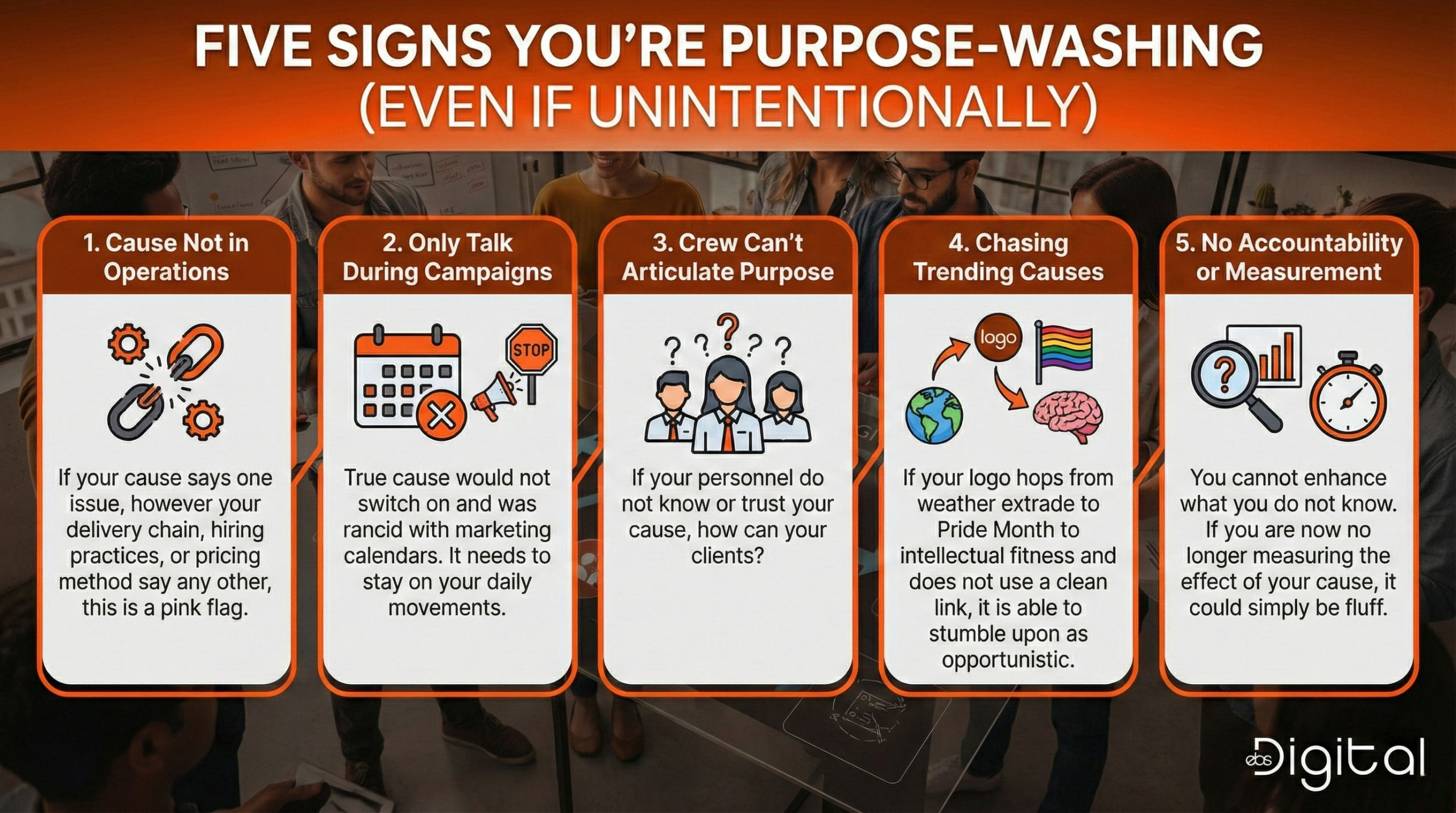
Your cause is not contemplated in your operations.
If your cause says one issue, however your delivery chain, hiring practices, or pricing method say any other, this is a pink flag.
You simply speak approximately because of campaigns.
True cause would not switch on and was rancid with marketing calendars. It needs to stay on your daily movements.
Your crew cannot articulate your cause.
If your personnel do not know or trust your cause, how can your clients?
You chase each trending cause.
If your logo hops from weather extradited to Pride Month to intellectual fitness and does not use a clean link, it is able to stumble upon as opportunistic.
There’s no duty or measurement.
You cannot enhance what you do not know. If you are now no longer measuring the effect of your cause, it could simply be fluff.
How to Build an Authentic Brand Purpose
If you are severely approximate, the brand purpose has to begin from within and no longer out of your advert agency.
1. Start With Your Foundational Why
Ask yourself (and your management crew): Why will we exist? What trouble are we seeking to resolve past profit?
Use frameworks like Simon Sinek’s Golden Circle to dig deep.
2. Align It With What You Actually Do
Your cause has to hook up with your product, service, or expertise. If it looks like a stretch, it in all likelihood is.
Example: A logistics agency’s cause may want to be “to transport groups ahead with the aid of making critical items accessible rapidly.” That’s actual. That’s relevant.
3. Live It Internally First
Your personnel need to sense your cause earlier than your clients ever listen to it. Train teams, embed it in onboarding, and praise conduct that helps it.
4. Communicate With Consistency (Not Just for Clout)
Share your cause clearly however, allow your movements to communicate louder than your ads. Purpose is a tale informed over time, now no longer a one-time submission.
5. Measure What Matters
Define clean KPIs tied to your cause. Whether this is carbon offset goals, scholarships provided, or volunteer hours logged using it, proportion it, and iterate.
Purpose in Action: Real-World Examples
- Ben & Jerry’s places activism in the middle of their enterprise, now no longer simply their marketing from criminal justice reform to refugee rights.
- LEGO is making an investment of tens of thousands into sustainable substances and packaging, aligning their logo with creativity and responsibility.
- TOMS Shoes developed their original “purchase-one-give-one” version right into a broader effect platform assisting intellectual fitness and network development.
None of those manufacturers are perfect. But they show up, live transparently, and dedicate themselves long-term. That’s what counts.
Final Thoughts: Make Purpose Practical or Don’t Use It at All
In 2025, the brand purpose is not only a buzzword, it is a logo mandate. But it’s simplest if you are inclined to do it again with substance. The manufacturers that upward thrust above are people who make a strategic engine now no longer only a marketing message. It’s now no longer approximately perfect; it is approximately consistent and authentic. So the following time you speak about approximately being a cause-driven logo, ask yourself: Are we without a doubt residing in this? Or are we simply seeking to seem like we are? At ebs Digital, we help brands uncover their true purpose and build marketing strategies that reflect it with integrity and impact.
Ready to clarify your brand’s why?
Book a Free Strategy Call with us today.
FAQ
Frequently asked questions
What is brand purpose?
Brand purpose is the reason a company exists beyond making a profit, often tied to a social, environmental, or human impact.
Why is brand purpose important in marketing?
It builds trust, drives customer loyalty, attracts talent, and differentiates your brand in a crowded market.
What is purpose-washing?
Purpose-washing is when a brand talks about values or causes without backing them up with real, consistent actions.
How can a brand avoid purpose-washing?
By aligning its purpose with business operations, living it internally, and measuring real impact not just messaging.